
Using data to change dentists’ prescribing behaviour: the Tiptap national trial
Status: Dissemination
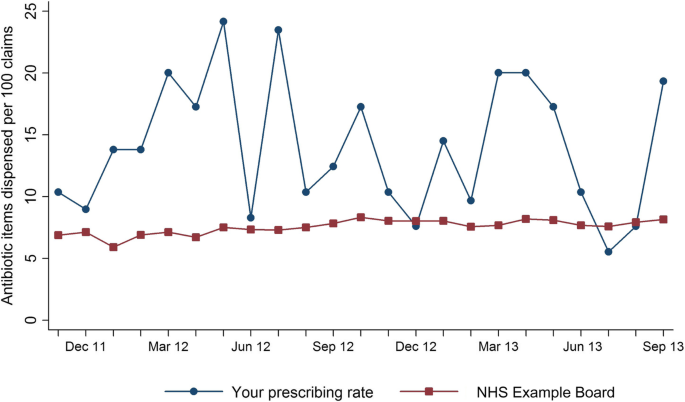
Antimicrobial resistance is an increasingly serious threat to global public health and patient safety. In Scotland, about 7% of antibiotics dispensed in community pharmacies are prescribed by dentists. However, despite national clinical guidance to support dentists make appropriate prescribing decisions, findings from surveys and audits suggest that dentists often prescribe antibiotics unnecessarily. It is known from earlier work that providing dentists with graphical audit and feedback (a way to provide personalised performance data alongside a comparator) about their antibiotic prescribing rate can lead to a substantial reduction in the number of antibiotics prescribed. One way to potentially enhance the effect of audit and feedback is to add a co-intervention, for example in-practice training. In Scotland, all NHS dental practices must undertake in-practice infection control training at least once every 3 years. The team providing this training worked with researchers at the University of Aberdeen and Dundee to develop a new component (TiPTAP) focusing on antibiotic prescribing and incorporating theory-informed behaviour change techniques.
This study aims to compare the effectiveness of individualised audit and feedback with or without TiPTAP training for reducing antibiotic prescribing in NHS dentists working in the NHS primary care dental practices. We conducted a 2-arm parallel cluster randomised trial with a process evaluation to answer our research question.
The trial is led by Dr Beatriz Goulao (University of Glasgow) and Claire Scott (NHS Public Delivery Services). It is funded by NHS Scotland.
Key outputs
Beatriz Goulao, Claire Scott,Irene Black, Jan Clarkson,Lee McArthur,Craig Ramsay, Linda Young, Eilidh Duncan. Audit and feedback with or without training in-practice targeting antibiotic prescribing (TiPTAP): a study protocol of a cluster randomised trial in dental primary care